August 13, 2026
What a leg-by-leg field-check actually shows
I ran my splits from two different 2018 races through the same field-check. My swim landed in the 60s both times, my bike and run in the 90s.
Follow-up on the backtest post from earlier this week, because a few people asked what “predicts the bike” actually means versus swim and run.
Short version: there are really two separate engines under the hood. One computes the bike time from real physics, FTP, aerodynamics, and the actual course terrain, watts in, time out. The other checks any split against real historical race data to see where it’d actually land in the field. The bike runs through both, physics first, then the field check. Swim and run only run through the second one. You give it your own target splits, since fatigue and how your legs feel that day aren’t something physics can compute ahead of time, and it checks those against the field the same way.
What that looked like on real races
I ran that field check on both of my 2018 races and got the same shape twice. Swim was my weakest leg both times, 67th percentile at Augusta, 63rd at Gulf Coast. Bike and run were both in the 90s, both times. Same pattern, two different races, four months apart.
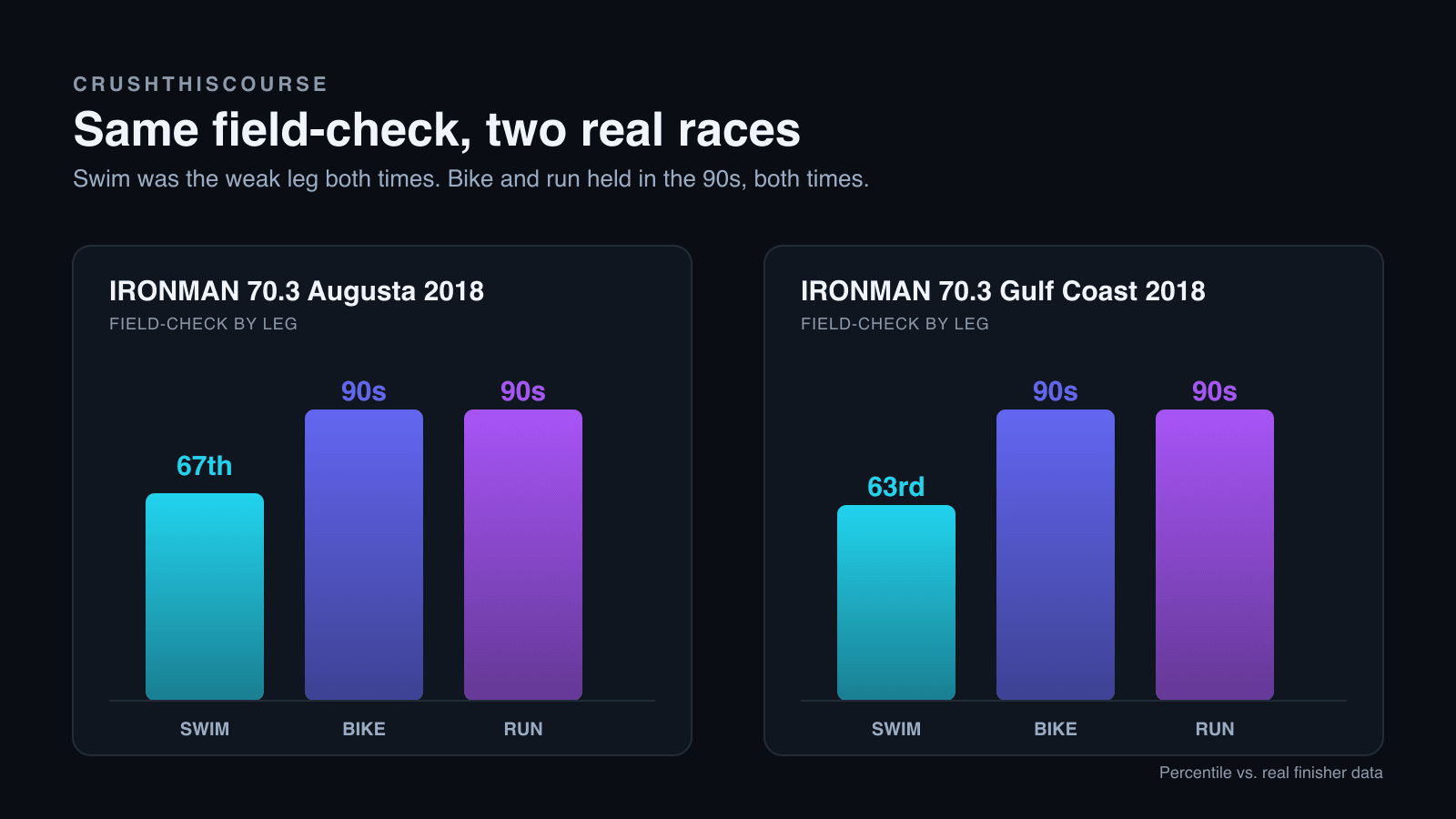
That’s the actual value of breaking a race down leg by leg against real data. It tells you exactly where your training time is worth the most, instead of one vague overall number.
Want to see your own leg-by-leg breakdown? Build your race plan and find out where your time is really going.